CEO’s statement

CEO Statement

Summary

  • In a year of shifting global dynamics, BII responded with action and impact.
  • Together with our partners, we went deeper into frontier markets, mobilised private capital at greater scale, and shaped markets to deliver impact where it matters most.
  • In 2025, we learned, adapted and positioned BII for the next phase of our role in development finance.

A year of momentum

At BII, we see impact as dynamic – shaped by continuous adaptation and evolution. It must keep pace with a rapidly changing world. For more than 75 years, we have done exactly that, delivering positive outcomes for people and the planet. That commitment remains strong today.

2025 was a year of momentum and preparation. As we approached the end of our 2022–26 Strategy, our focus was not only on what we achieved in the year itself, but on what we have learned, and how those lessons should shape the choices we make next.

Throughout the year we continued to deliver at scale. We committed £1.8 billion, with £1.1 billion invested in Africa and £0.7 billion in Asia, while continuing to deliver against our climate finance and gender investing objectives. The successful delivery of our climate and gender commitments across the strategy period provides a strong foundation for the next phase of our work.

At the time of writing, the global economic environment remains challenging, with persistent inflation, tariff pressures and heightened geopolitical uncertainty creating volatility across the markets in which we operate. These dynamics continue to affect our portfolio, and we are monitoring their impact closely.

At the same time, they also reaffirm our conviction in the long‑term, steady investment that development finance provides. Our experience investing across Africa and Asia during a period of significant global change has clarified where development finance can play a distinctive role. It has sharpened our judgement about where our capital, partnerships and influence can make the greatest difference.

In 2025, this translated into three areas of focus that reflect how our role continues to evolve.

Throughout the year we continued to deliver at scale.”

In 2025 we have committed
£1.8bn
£1.1bn

of those commitments in Africa

£0.7bn

of those commitments in Asia

Going further in frontier markets

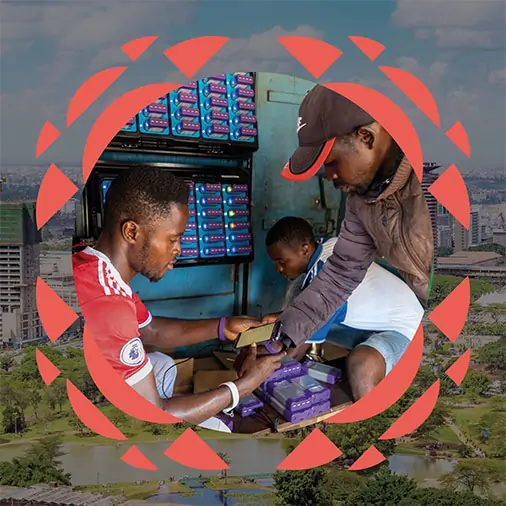
One area where our impact is most tangible is in frontier markets. These are places where capital is scarce, risks are higher and our role as a development finance institution is most clearly differentiated. In 2025, we continued to go deeper into these markets, backing initiatives such as Acumen’s Hardest‑to‑Reach (H2R), which is expanding access to affordable renewable energy in countries where electricity access is as low as 12 per cent. These investments often require patience and flexibility, but they are where our capital can unlock lasting change.

Unlocking capital at greater scale

Another defining focus of the year was mobilising much-needed private capital. The scale of today’s development and climate challenges means that BII’s own balance sheet will never be enough on its own. In 2025, we worked with global asset managers and institutional investors to bring new funding into emerging markets. At the same time, we placed renewed emphasis on mobilising domestic capital – such as our partnerships with Zambia’s National Pension Scheme Authority (NAPSA) and the Public Investment Corporation (PIC) in South Africa – because strong financial systems are essential for sustainable growth.

Recycling capital is also central to how DFIs scale impact. By exiting investments at the right time, DFIs can demonstrate commercial viability and make space for commercial investors to follow. Our exits from utility-scale renewable projects such as Ayana Renewable Power in India and Kenhardt in South Africa showed how development capital can support projects through early risk and then transition them to sustainable, market‑based financing, allowing DFI capital to be redeployed.

Driving market-level impact

In 2025, we also reflected on how we can maximise our impact. While individual investments remain fundamental to our work, we increasingly focused on how those investments can strengthen entire markets – encouraging competition, building sectors and accelerating progress beyond any single transaction. In Nepal, WorldLink’s expansion to over one million customers helped stimulate competition, improving both affordability and service quality for consumers. Applying what we have learned across geographies and sectors is central to this approach. For example, in electric mobility, lessons from our investments in India are now informing our approach in Kenya. Together, these examples show how targeted investments can contribute to changes that extend well beyond individual businesses.

None of this is possible without partnerships. The challenges we face are complex, and in a world of constrained resources, collaboration is more essential than ever. Throughout the year, we accelerated our collaboration with other DFIs, local partners and governments, strengthening existing relationships and forming new ones. These partnerships will be a cornerstone of our next strategy.

Finally, as we concluded our current strategy period, we have reflected on what has worked, and where we can do better. These lessons have helped shape a new strategy that is grounded in today’s realities and focused on where our capital and expertise can make the greatest difference.

In this Annual Review, we show how we put our approach into action – in the markets we serve, through the partnerships we build and in the outcomes we seek to achieve.


Leslie Maasdorp

Chief Executive Officer